
Jehovah or Yahweh: What Is the Name of God?

Based on the Bible Message Jehovah or Yahweh? What Is the True Name of God?
by Scott Mitchell – Unlock the Bible Now!
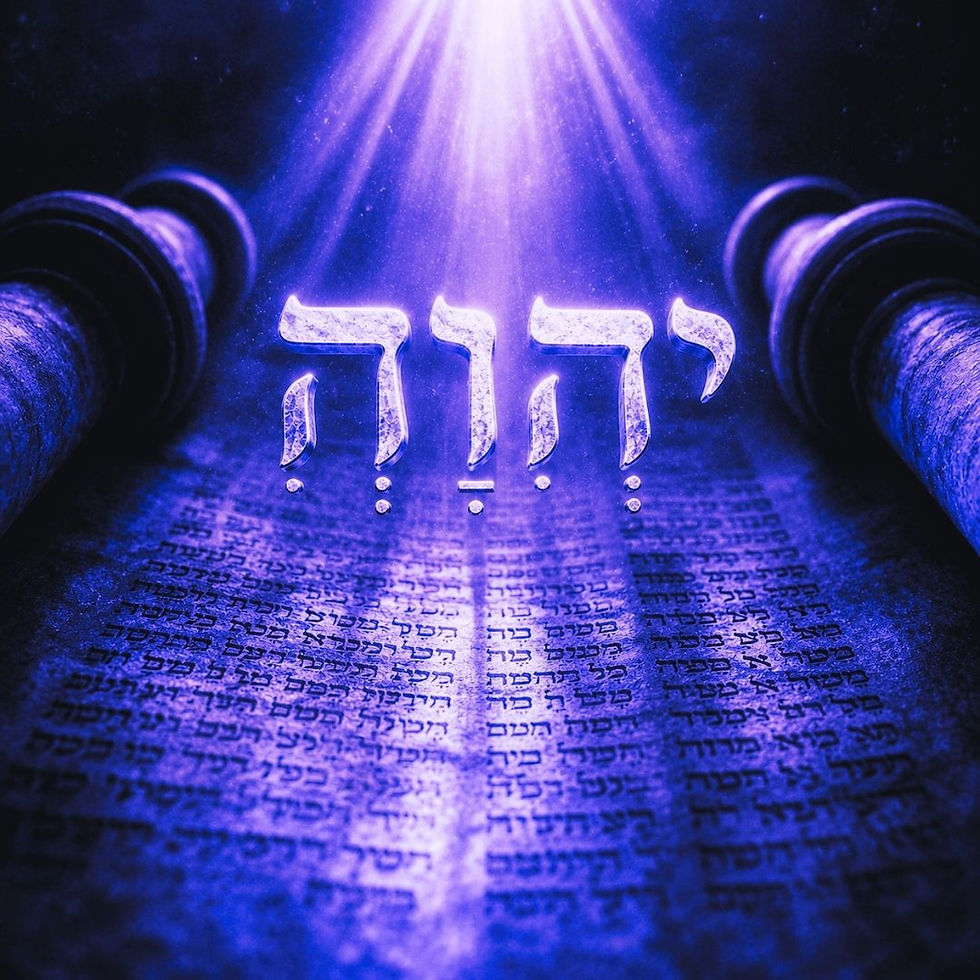
God has a name. Scripture tells us to praise His name, call upon His name, and make His name known. Yet today there is considerable disagreement over how the divine name found throughout the Hebrew Scriptures should be pronounced. Is it Jehovah or Yahweh?
This question reaches beyond pronunciation. It touches upon something far more fundamental: Do we believe God preserved His Word as He promised?
Psalm 68:4 declares:
“Sing unto God, sing praises to his name: extol him that rideth upon the heavens by his name JAH, and rejoice before him.”
Scripture does not present the name of God as unknowable or forbidden. His people were commanded to speak it, sing praises to it, and call upon it. If God intended His name to be hidden or impossible to pronounce, these commands would make little sense.
Jehovah or Yahweh: Can the Name of God Be Known?
The divine name commonly called the tetragrammaton consists of four Hebrew letters: Yod-He-Vav-He. In English transliteration, these are represented as YHWH or JHVH.
The traditional English rendering is Jehovah, corresponding to the Hebrew pronunciation Yehovah. In contrast, Yahweh has become increasingly common among modern scholars and believers.
Much of the argument for Yahweh depends upon the claim that ancient Biblical Hebrew was originally written only with consonants and that vowel markings were added centuries later by Masoretic scribes. If the original vowels were not preserved, scholars must reconstruct how the divine name might once have been pronounced.
But Scripture itself gives us reason to question that premise.
Psalm 148:13 says:
“Let them praise the name of the LORD: for his name alone is excellent; his glory is above the earth and heaven.”
How could Israel praise the name of the Lord if His name could not be spoken? How could generations faithfully pass down the Scriptures if the written language provided no reliable means of preserving the pronunciation of its words?
The issue of Jehovah or Yahweh therefore becomes connected to the larger question of biblical preservation.
Jehovah or Yahweh and the Tetragrammaton
Jewish tradition eventually developed a prohibition against speaking the tetragrammaton. The divine name was often replaced with HaShem, meaning simply “the name.”
One passage sometimes associated with this tradition is Leviticus 24:16:
“And he that blasphemeth the name of the LORD, he shall surely be put to death…”
But notice what the verse actually says. The prohibition is against blaspheming the name of the Lord. It does not prohibit speaking His name.
That distinction matters.
Throughout Scripture, God's people are repeatedly instructed to praise His name. Moses himself asked God what name he should give the children of Israel when they asked who had sent him.
God answered in Exodus 3:14:
“I AM THAT I AM… Thus shalt thou say unto the children of Israel, I AM hath sent me unto you.”
God did not hide His identity from His people. He revealed Himself to them.
The Preservation of God’s Word
Psalm 12:6–7 gives one of the clearest statements concerning the purity and preservation of Scripture:
“The words of the LORD are pure words: as silver tried in a furnace of earth, purified seven times. Thou shalt keep them, O LORD, thou shalt preserve them from this generation for ever.”
God did not merely inspire His Word and then leave its preservation to chance. He promised to preserve His words.
This becomes important when considering the claim that Hebrew vowels were absent from the original text and supplied many centuries later. If the pronunciation of the words depended entirely upon an oral tradition that was not represented in the writing, then an important element of those words was left uncertain.
Jesus made a statement concerning the precision of the written law that deserves careful attention.
Matthew 5:17–18 says:
“Think not that I am come to destroy the law, or the prophets: I am not come to destroy, but to fulfil.
For verily I say unto you, Till heaven and earth pass, one jot or one tittle shall in no wise pass from the law, till all be fulfilled.”
Jesus specifically referred to the smallest written details of the Hebrew text.
Jehovah or Yahweh: Why Jots and Tittles Matter
The word translated “jot” is the Greek iota, corresponding to the Hebrew yod, the smallest letter of the Hebrew alphabet. A “tittle” refers to an extremely small written mark or point.
Christ's statement emphasizes precision. Not even the smallest element of God's written Word would fail.
This raises an important question: If the written details of Scripture were important enough for Jesus to mention, why should we accept the idea that something as fundamental as the pronunciation of its words was left unrecorded for centuries?
Jesus also declared in John 10:35:
“…the scripture cannot be broken.”
Scripture means writings. God's revelation was not dependent solely upon human memory or later reconstruction. It was written and preserved.
Deuteronomy 4:2 further warns:
“Ye shall not add unto the word which I command you, neither shall ye diminish ought from it…”
A similar warning appears at the end of Revelation. From beginning to end, Scripture treats the words of God with exactness.
The First Attack Was Against God’s Word
The pattern of questioning God's Word did not begin with modern scholarship. It began in the garden.
Genesis 3:1 records the serpent's question:
“Yea, hath God said…?”
That question established a pattern that continues to this day.
First comes doubt: Did God really say that?
Then comes alteration: Perhaps what God said means something different.
Finally comes contradiction.
The serpent followed his question with a direct denial of God's Word:
“Ye shall not surely die.”
This is why questions surrounding Scripture must be approached carefully. There is nothing wrong with studying words, languages, manuscripts, or history. We are commanded to study and rightly divide the word of truth. But scholarship should never become an authority placed above Scripture itself.
When scholarship tells us that God's Word was not adequately preserved, the
problem is no longer merely academic.
Jehovah or Yahweh and Confidence in Scripture
The debate over Jehovah or Yahweh illustrates the larger issue. If the vowels necessary to pronounce Hebrew words were absent and the correct pronunciation was lost, then scholars are left attempting to reconstruct something God supposedly did not preserve.
But God's own testimony concerning His Word points in another direction.
His words are pure.
His Word is preserved.
The Scripture cannot be broken.
The position presented by Scripture leads to Jehovah—or Yehovah in Hebrew—as the divine name rather than the modern reconstruction Yahweh.
For English-speaking believers, Jehovah is a faithful rendering of that name.
Jehovah, Jesus, and the Redeemer of Israel
There is another significant connection in Scripture.
Isaiah 44:6 declares:
“Thus saith the LORD the King of Israel, and his redeemer the LORD of hosts; I am the first, and I am the last; and beside me there is no God.”
The Lord identifies Himself as the first and the last. Yet Jesus Christ uses this same language of Himself in Revelation.
The connection continues in the names themselves. Yehovah corresponds with Jehovah, while Yeshua corresponds with Joshua or Jesus. Jesus is the Savior and Redeemer, and the New Testament identifies Him with the Creator.
Paul writes in Colossians 1:15–17 concerning Christ:
“Who is the image of the invisible God, the firstborn of every creature:
For by him were all things created, that are in heaven, and that are in earth, visible and invisible…
And he is before all things, and by him all things consist.”
Jesus Christ is not merely part of creation. He is the Creator.
John takes us even further.
The Word Was God
John 1:1–3 declares:
“In the beginning was the Word, and the Word was with God, and the Word was God.
The same was in the beginning with God.
All things were made by him; and without him was not any thing made that was made.”
Jesus Christ is the Word of God.
Creation itself came into existence through the Word. God spoke, and creation obeyed. The One who created language is certainly capable of preserving His own words.
This is why the question of Jehovah or Yahweh should ultimately bring us back to confidence in the Scriptures rather than confidence in the changing conclusions of men.
We can study ancient languages. We can examine manuscripts. We can consider historical arguments. But none of those things should cause us to abandon the plain testimony God gives concerning His Word.
Trust the Word God Preserved
Modern textual criticism frequently presents certainty about things no living scholar witnessed while simultaneously casting uncertainty upon the Bible believers have trusted for generations.
We should remember the serpent's first question:
“Yea, hath God said…?”
The believer's confidence must rest in what God has said.
God promised to preserve His Word. Jesus declared that Scripture cannot be broken. The Lord spoke of even the smallest details of the written text as significant.
For that reason, the name of God in English is Jehovah.
But the greatest importance of His name is not an academic argument over Hebrew pronunciation. Scripture brings us to the One through whom salvation comes.
Romans 10:13 declares:
“For whosoever shall call upon the name of the Lord shall be saved.”
Jesus Christ died for our sins, was buried, and rose again. He is the Word made flesh, the Creator, the Redeemer, and the only way to the Father.
God has not left us without His Word, and He has not left us wondering how we can be saved.
His Word has spoken.
The question is whether we will believe it.


Comments