
Jeshua and Zerubbabel: A Prophetic Picture of God’s Final Temple

Based on Bible Mysteries Podcast Episode 294: Jeshua and Zerubbabel | Who Will Build the Final Temple?
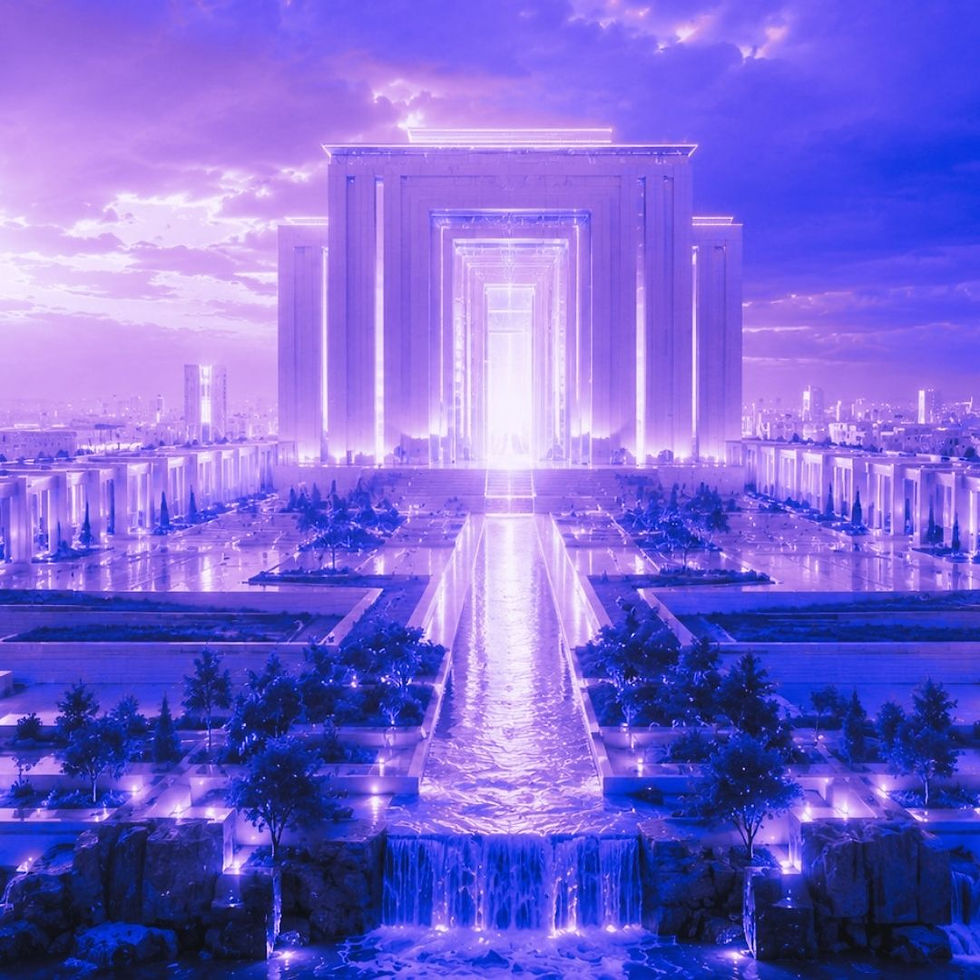
The names Jeshua and Zerubbabel may not immediately stand out to most Bible readers, but their role in rebuilding the temple after Israel’s Babylonian captivity raises an interesting prophetic question. Were these two men involved only in the restoration of the Second Temple, or does Scripture use them as types pointing toward something yet to come?
Jeshua served as high priest, while Zerubbabel was governor of Judah. Together, they were called by God to participate in rebuilding the house of the Lord after the captivity. Yet the prophecies surrounding them extend far beyond the historical circumstances in which they lived.
When Haggai speaks of shaking the heavens and the earth, overthrowing kingdoms, the coming of the Desire of all nations, and a latter house filled with greater glory, the context appears to move beyond the Second Temple.
This suggests that the historical work of Jeshua and Zerubbabel may provide a prophetic picture of the temple God Himself will establish when Jesus Christ returns.
Jeshua and Zerubbabel Return From Babylon
Ezra records the return of the captives from Babylon:
“Now these are the children of the province that went up out of the captivity, of those which had been carried away... Which came with Zerubbabel, Jeshua...”— Ezra 2:1–2
Their names are significant.
Zerubbabel means “born in Babylon” or one who comes from Babylon. His very name connects him to the captivity from which Israel was being delivered.
Jeshua, also rendered Joshua, comes from the same Hebrew name associated with Yeshua and carries the meaning “Jehovah saves.” Here we have a governor coming out of Babylon and a high priest whose name points to salvation.
That alone should cause us to pay attention.
Haggai identifies them together:
“...came the word of the LORD by Haggai the prophet unto Zerubbabel the son of Shealtiel, governor of Judah, and to Joshua the son of Josedech, the high priest...”— Haggai 1:1
The people had returned to the land, but the temple remained unfinished. They said:
“The time is not come, the time that the LORD'S house should be built.”— Haggai 1:2
God said otherwise.
Jeshua and Zerubbabel Were Stirred by God
The rebuilding of the temple was not simply a human religious project. God commanded the work and stirred the people to accomplish it.
Haggai records:
“And the LORD stirred up the spirit of Zerubbabel the son of Shealtiel, governor of Judah, and the spirit of Joshua the son of Josedech, the high priest... and they came and did work in the house of the LORD of hosts, their God.”— Haggai 1:14
This distinction becomes important when considering the future.
Today there are those who desire to see another temple built in Jerusalem. But Scripture tells us that a temple existing before Christ’s return will eventually be associated with the abomination of desolation and the Antichrist.
The temple God fills with His glory is something altogether different.
Jeshua and Zerubbabel and the Glory of the Latter House
Haggai 2 contains language that appears to move well beyond the rebuilding taking place in Zerubbabel’s day.
God says:
“Yet once, it is a little while, and I will shake the heavens, and the earth, and the sea, and the dry land; And I will shake all nations, and the desire of all nations shall come: and I will fill this house with glory, saith the LORD of hosts.”— Haggai 2:6–7
The heavens and earth were not shaken when the Second Temple was rebuilt. Neither were the kingdoms of the world overthrown.
Then comes this promise:
“The glory of this latter house shall be greater than of the former, saith the LORD of hosts: and in this place will I give peace...”— Haggai 2:9
Solomon’s Temple possessed extraordinary glory. The Ark of the Covenant was there, and the glory of the Lord filled the house.
The Second Temple never appears to have surpassed Solomon’s Temple in that manner. The Ark of the Covenant did not return to it, and ultimately Rome destroyed the temple in AD 70.
If Haggai’s prophecy refers to something greater than what existed in Zerubbabel’s day, then we should consider whether the prophecy is pointing toward a future house of God.
Jeshua and Zerubbabel Point Toward a Future Fulfillment
The prophetic connection becomes even stronger in Zechariah.
Joshua the high priest appears in a remarkable scene:
“And he shewed me Joshua the high priest standing before the angel of the LORD, and Satan standing at his right hand to resist him.”— Zechariah 3:1
Joshua is clothed in filthy garments. Those garments are removed, his iniquity passes from him, and he receives clean garments and a fair mitre.
Then God says:
“Hear now, O Joshua the high priest... for, behold, I will bring forth my servant the BRANCH.”— Zechariah 3:8
The BRANCH is a prophetic reference to Jesus Christ.
The passage continues:
“...and I will remove the iniquity of that land in one day.”— Zechariah 3:9
That has not yet occurred.
The scene appears to present more than the restoration of one high priest. It pictures cleansing, restoration, the coming of Christ, and the removal of Israel’s iniquity.
Jeshua and Zerubbabel and the Temple of the Antichrist
Scripture indicates that a temple will exist before the return of Christ.
Daniel prophesied that a coming prince would cause sacrifice and oblation to cease and bring about the abomination of desolation. Jesus later referred directly to Daniel’s prophecy:
“When ye therefore shall see the abomination of desolation, spoken of by Daniel the prophet, stand in the holy place...”— Matthew 24:15
Paul adds another important detail concerning the man of sin:
“Who opposeth and exalteth himself above all that is called God, or that is worshipped; so that he as God sitteth in the temple of God, shewing himself that he is God.”— 2 Thessalonians 2:4
There must therefore be a temple associated with these events.
But should we assume this is the glorious latter house promised through Haggai?
I don't believe it is.
A temple that is desecrated by the Antichrist and becomes the setting for the abomination of desolation cannot be the final house in which God promises to place His glory and dwell with restored Israel forever.
There are two very different pictures in Scripture.
One temple is desecrated by the man of sin.
The other is filled with the glory of God.
Jeshua and Zerubbabel in Zechariah’s Prophecy
Zerubbabel also appears in a prophetic setting in Zechariah 4. The prophet sees a golden candlestick and two olive trees—imagery later associated with the two witnesses of Revelation 11.
In the midst of that vision, God speaks concerning Zerubbabel:
“Not by might, nor by power, but by my spirit, saith the LORD of hosts.”— Zechariah 4:6
Then:
“The hands of Zerubbabel have laid the foundation of this house; his hands shall also finish it...”— Zechariah 4:9
Historically, Zerubbabel did participate in rebuilding the Second Temple. But why does his name continue to appear in passages filled with prophetic imagery?
Haggai adds another intriguing statement:
“In that day, saith the LORD of hosts, will I take thee, O Zerubbabel, my servant... and will make thee as a signet: for I have chosen thee...”— Haggai 2:23
The preceding verses describe God shaking heaven and earth and overthrowing kingdoms.
That did not happen during Zerubbabel’s lifetime.
This is why I believe there may be a future role for both Jeshua and Zerubbabel when God establishes His kingdom and restores Zion.
The Final Temple God Establishes in Zion
The strongest contrast appears in Ezekiel.
Beginning in Ezekiel 40, the prophet is shown an extraordinary temple complex. Ezekiel receives this vision while Israel is still in captivity—before Jeshua and Zerubbabel returned to Jerusalem to rebuild.
The temple Ezekiel sees is already complete in the vision.
Then something happens that distinguishes this house from the temple the Antichrist will desecrate:
“And the glory of the LORD came into the house by the way of the gate whose prospect is toward the east.”— Ezekiel 43:4
God's glory fills the house.
He declares:
“Son of man, the place of my throne, and the place of the soles of my feet, where I will dwell in the midst of the children of Israel for ever...”— Ezekiel 43:7
This is not a temporary temple awaiting another destruction.
It is associated with God's throne, His glory, restored Israel, and His dwelling among His people.
Jeshua and Zerubbabel Point to Restoration, Not Desecration
Ezekiel’s temple has another feature unlike anything associated with the previous temples.
Living water flows from the sanctuary.
Ezekiel watches as the water begins beneath the threshold of the house. It grows from ankle deep, to knee deep, to the loins, until it becomes:
“...a river that I could not pass over: for the waters were risen, waters to swim in...”— Ezekiel 47:5
The river flows eastward toward the Dead Sea, and something remarkable happens:
“...the waters shall be healed. And it shall come to pass, that every thing that liveth, which moveth, whithersoever the rivers shall come, shall live...”— Ezekiel 47:8–9
Trees grow along its banks. Their fruit is for meat and their leaves for medicine.
This is not a picture of desolation.
It is a picture of life.
Jeshua and Zerubbabel: Coming Out of Babylon
The names bring us back to where we began.
Jeshua means Jehovah saves.
Zerubbabel is connected with coming from Babylon.
Together they present a remarkable prophetic picture: salvation and deliverance from Babylon, a restored priesthood, a restored nation, and the house of God established in Zion.
Isaiah describes Israel's future restoration:
“...shall a nation be born at once? for as soon as Zion travailed, she brought forth her children.”— Isaiah 66:8
This is the Israel God restores.
I believe Jeshua and Zerubbabel are types of those who will preside over and govern in the restored city of Zion and its temple. Jeshua, bearing the same Hebrew name associated with Jesus, points toward the great High Priest.
Zerubbabel, coming out of Babylon, pictures a people delivered from the corrupt world system and restored to their God.
Whether these two men themselves will return in resurrection to fulfill a future role is an intriguing possibility. Scripture gives us enough prophetic connections to consider it carefully, while recognizing where the Bible leaves details unrevealed.
What Scripture does make clear is that the temple desecrated by the Antichrist is not the final glory of Zion.
Man may build his temple.
The Antichrist may defile it.
But God has already revealed the house in which He will place His glory.
From that sanctuary will flow living water.
And wherever that river goes, there will be life.


Comments